It seems that the German Synod fathers also do not feel obliged to keep their interventions at the Synod a secret. Archbishop Heiner Koch of Berlin spoke about a selection of points from the Instrumentum laboris, including the topic that has many extremely worried: divorce, a second marriage and Communion.
That aside, and I do see some problems with the archbishop’s presentation on that topic, he also discusses the reality of Catholic marriage, or the lack thereof, in heavily secularised urban settings, thje powerful witness of a Christian marriage, the need for a positive language and closes with a pro-life message.
The original text can be found here, and my translation follows:
 Concerning Point 28 of the Instrumentum laboris:
1. Until recently I was the bishop of the Diocese of Dresden-Meißen and now I come to the Synod as archbishop of Berlin. In eastern Germany more than 80 per cent of the people are not baptised and have often not had any contact with the Christian faith and the Church for many generations. We Catholics are sometimes no more than 3 or 4 percent of the population. But in the cities, for example in Dresden and Leipzig, we are a young Church: the majority of Catholics is between 20 and 30 years of age. That is the age at which young people marry and start a family. Many of them, however, do not want to get married and live together unmarried. For many, that has nothing to do with a lack of commitment or a failing morality. The institution and the tradition of marriage is not considered to be of vital importance.
Concerning Point 35 of the Instrumentum laboris:
2. But when two young people marry before the Church – often one of the couples belongs to another faith or confession, and not seldomly he or she is not baptised – then this is in our society a profound and often thought-provoking witness of faith: “Why do they marry before the Church? Wat does that mean?” unbaptised friends wonder when they experience such a Church wedding. The wedding leads them to the question of God and the faith. I am grateful to the witness of young people who are preparing for marriage. Forty percent of the marriages of Catholics in my archdiocese are marriages in which one of the partners belongs to another confession. Such marriages are ecumanically speaking a special challenge and opportunity. These families expect from us an encouraging word. In section 28 of the Instrumentum laboris they are taken into account much too weakly.
It is so important that the Holy Father, with us, sends out from this Synod the Gospel of the mystery of marriage, with a new hermeneutic, in a new language, a language of fullness, of blessing, of the richness of life, provocative and inviting for the people. What grace is offered to the people, what participation in God’s order of creation and salvation, what depths of mutual love between God and people: Marriage is for us about a life in fullness and in the love of God, even in our brokenness. This must be our message in Church and society. The Synod can not give the impression that we mainly fought over divorce and conditions for admittance to the sacraments.
However, deeply faithful young Christians also ask me, in light of experiences in their families and circles of friends, the question: “But when we divorce and later enter into a new marriage, why are we then barred from the table of the Lord? Does God refuse the people who have gone through a divorce?” I then try to explain why divorced and remarried people can not receive Communion, but the arguments of these theological statements do not silence the questions in the hearts of people: Is there no place at the Lord’s table for people who experienced and suffered an irreversible break in their lives? How perfect and holy must one be to be allowed to the supper of the Lord? It becomes clear to me every time that the question of allowing divorced and remarried people to the Eucharist is not in the first place a question about the indissolubility of the sacrament of marriage. Many people question the Church and her mercy in this regard. More than a few people concerned leave the Church with their children on the basis of what they see as rejection. Ultimately and most profoundly it is much more about the Christian faith and God and His mercy. For many, the question of admittance to the Eucharist makes them doubt God.
Concerning Point 29 of the Instrumentum laboris:
3. In Berlin alone there are more than 100,000 single parents with all their challenges and stress in their personal lives, raising their children and their work. In all that we think about: They too are families.
Concerning Points 24 to 27 of the Instrumentum laboris:
4. Families with many children, who are a blessing for us, deserve special care. In Germany their number has dropped more drastically than in other parts of the world; a true reason for our demographic concerns. Their financial security, insufficient recognition of the pedagogical benefit of the parents in our society and the difficulty of later reintegration into the work force represent great scandals. To them in particular we should express a word of recognition and our esteem.
Concerning Point 29 of the Instrumentum laboris:
5. For one third of the Catholics in the city of Berlin, German is not their mother tongue. Berlin is home to many immigrants, asylum seekers and refugees. From the first day of my service in this city I have also witnessed the drama of refugee families, separated by violence or fled together, but now far from home. We can not leave these families alone, not even at this Synod. The Holy Family fled and only had a manger for their child, but this refugee family became a blessing for us all. Does God perhaps today also want the refugee families in particular to be a blessing for us? At this Synod we must also speak about these families and we must speak about ourselves as the new family of Jesus, the family of His Church, which does not erect any walls or barbed wire.The refugee families are part of us and we of them. We are a blessing for each other.
Concerning Points 17 and 20 of the Instrumentum laboris:
6. We should be grateful to the married couples who have faithfully lived and sometimes also persevered in the life of their families in good and bad times, for their witness of faith made with their marriage, and also express this as a Synod. Family is more than young parents with their young children. Perhaps family life becomes hardest in old age and death, about which ever more pressing questions are being asked in our society. The current discussion in Europe about so-called assisted dying is even more dramatic as many elderly people find no home in their families and no place for them in their small houses and in the face of many occupational stresses. Aging, being ill and dying are topics of the family, about which we can not remain silent in this Synod, when we talk about the beauty of the family. Protecting unborn life from conception and protecting life during and at the end of life belong inseparably together.
Rome, 5 October 2015
Heiner Koch
Archbishop of Berlin


 Sister Helen Prejean, renowned American anti-death penalty advocate,
  “Recourse to the death penalty on the part of legitimate authority, following a fair trial, was long considered an appropriate response to the gravity of certain crimes and an acceptable, albeit extreme, means of safeguarding the common good.
 As Belgian politics are once more on the verge of discussing the topic of abortion and whether or not it should be decriminalised, the bishops of Belgium
 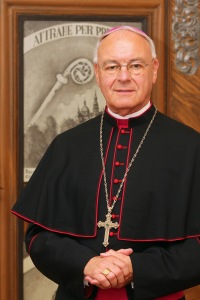 On the same 5th of June it was announced this had been the last such day presided over by Bishop Heinz Joshistef Algermissen. That was not unexpected, as the bishop reached the age of 75 in February, and there was no reason to assume that his retirement would not be accepted within the following months. Bishop Algermissen led the Diocese of Fulda since 2001. Before that he served as an auxiliary bishop of Paderborn for five years.
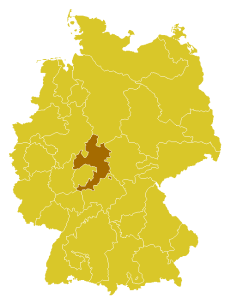 Today, the Diocese of Fulda covers the northerns and eastern parts of the Land of Hesse, a small part of Thuringia and and exclave in Bavaria. Within its 10,318 square kilometres live some 400,000 Catholics a little of 20% of the entire population. It remains a pilgrimage site because of St. Boniface’s wish to be buried there, instead of in Mainz or Utrecht. He had been killed in the Frisian swamps near what is now Dokkum in the Netherlands (hence the connection to the the Diocese of Groningen-Leeuwarden, hinted at above). With the acceptance of the retirement of Bishop Algermissen, and until the catedral chapter has chosen a diocesan administrator, Bishop Karlheinz Diez leads the diocese. He is Fulda’s sole auxiliary, making him the automatic choice for the role.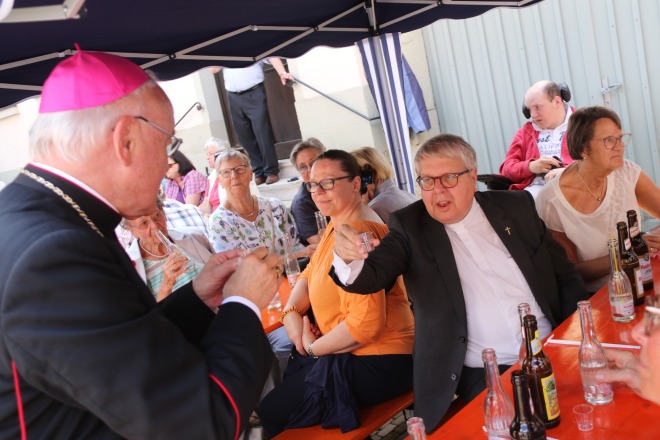

 Flyers, an online petition, a banner in front of his residence, security measures at Mass… What has Bishop Georg Bätzing done to warrant such an outpouring of protest? Well, according to
  Among the cardinals in question are Jozef Cardinal De Kesel (at left), archbishop of Mechelen-Brussels, and Anders Cardinal Arborelius, bishop of Stockholm. They have been appointed as members of the Dicastery for the Laity, the Family and Life, and the Pontifical Council for Promoting Christian Unity, respectively.
 “As bishops we realise that you can’t say that, if you are Catholic, there is a single party to vote for. From a Catholic perspective, something can be said in favour of all parties.”
 Why single out the PVV, then? Are their positions more abhorent than those of other parties? The tone of their way of doing politics is certainly not one we should promote, and their singling out of parts of the population and disrespect for the rule of law when it does not agree with their positions are indeed problematic. For Bishop de Korte these seem to be decisive factors. For others, like myself, the respect for life (both born and unborn) may be equally decisive, and in that context the left-wing parties such as GroenLinks and SP are just as undeserving of my vote. Singling out the PVV is too simplistic: no party is perfect, and when you say that “something can be said in favour of all parties,” an honest reading wil also show that that includes the PVV.
 Less then two months in, Archbishop Jozef De Kesel weathered his first true storm these past few days, as his comments about the freedom of Catholic hospitals to refuse performing euthanasia led to strong criticism, even from politicians.
 So today is the big day. I’ve not seen such excitement for the launch of an encyclical, but, then again, I’ve only been around as a Catholic for four of them. But this time around, everyone has an opinion, in part because they’ve seen the leaked early draft of Laudato Si’*, but mostly because the encyclical’s topic is such a heavily politicised one. Especially on the American side of the Atlantic, I notice that the question of the environment, and especially global warming, is seen as inherently connected and opposed to questions of population control and, more often than not, economic concerns. The issue of the scientific validity of what Pope Francis is a distant third element of the opposition.
 In Caelo et in Terra